

Consumer Health
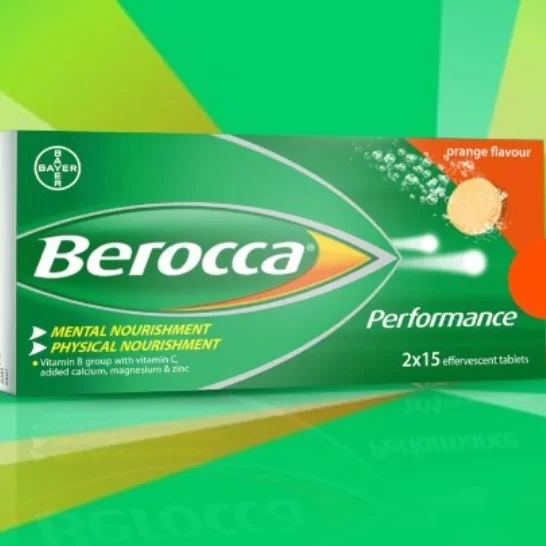
Berocca Performance Orange - Thailand
For mental and physical nourishment
Product Name
Berocca® Performance
Name and strength of active ingredient
Each tablet contains
|
| %RDI |
Vitamin C (Ascorbic acid) | 500 mg | 833.33 |
Vitamin B1 (Thiamine) | 15 mg | 1000.00 |
Vitamin B2 (Riboflavin) | 15 mg | 882.35 |
Vitamin B3 (Nicotinamide) | 50 mg | 250.00 |
Vitamin B5 (Pantothenic acid) | 23 mg | 383.33 |
Vitamin B6 (Pyridoxine) | 10 mg | 500.00 |
Vitamin B12 (Cyanocobalamin) | 10 mcg | 500.00 |
Biotin (Vitamin H) | 150 mcg | 100.00 |
Folic acid | 400 mcg | 200.00 |
Calcium | 100 mg | 12.50 |
Magnesium | 100 mg | 28.57 |
Zinc | 10 mg | 66.66 |
Product description
Orange effervescent tablet: Cylindrical, biplanar, speckled, pale orange tablet with odour of orange which dissolves in water with effervescent, giving an orange solution with odour of orange.
Fruity effervescent tablet: Cylindrical, biplanar, speckled, red to dark pink tablet with odour of tutti fruiti which dissolves in water with effervescent, giving a red solution with odour of tutti fruiti.
Acerola and Mango effervescent tablet: Cylindrical, biplanar, speckled, pale orange tablet with odour of acerola and mango which dissolves in water with effervescent, giving an orange solution with odour of acerola and mango.
Pharmacodynamics/Pharmacokinetics
Pharmacodynamics
Pharmacotherapeutic group: vitamin B complex with vitamin C and minerals
ATC Code: A 11 E B and A 11 E C.
The vitamin content of this product is intended for use in deficiencies and increased requirement states. As a result, the content of the individual vitamins in this product was formulated above the recommended nutritional Recommended Dietary Allowances (RDAs) which are not intended for therapeutic use. One daily dose provides: ascorbic acid 500 mg, thiamine 15 mg, riboflavin 15 mg, nicotinamide 50 mg, pyridoxine 10 mg, cyanocobalamin 0.01 mg, folic acid 0.4 mg, pantothenic acid 23 mg and biotin 0.15 mg.
Since the water-soluble vitamins are not stored by the body to any appreciable extent, the supply of water-soluble vitamins might be insufficient in the elderly, during pregnancy and lactation, in persons on diet, during certain chronic diseases, during extensive physical exercises and during long-lasting stress and chronic alcohol abuses. The demand of vitamin C (ascorbic acid) in higher than normal in smokers and in women using oral contraception.
B vitamins are involved in a broad spectrum of cell metabolic reactions, such as synthesis of neurotransmitters.
Vitamin C (ascorbic acid) is a biological antioxidant and plays an important role in the inactivation of free radicals. It is also required for the activity of a number of enzymes involved in hydroxylation reactions and the metabolism of e.g. cholesterol, bile acids and drugs. Vitamin C (ascorbic acid) enhances the absorption of iron in the intestine, influences folic acid metabolism and leukocyte function. It promotes the formation of connective tissue and is essential for the formulation and function of teeth, bones and capillaries.
Calcium participates in numerous physiological processes, enzyme systems and in nerve transmission, and interacts in many of these processes in a complex way with magnesium and vitamin B6.
Magnesium participates in a variety of reactions including protein catabolism, fatty acid metabolism, sugar oxidation and respiratory reactions.
Zinc is an important trace element in the body and is involved as a catalyst in more than 200 enzymes. It is a natural constituent of many proteins, hormones, neuropeptides and hormone receptors. Amongst others, zinc is directly involved in the synthesis of co-enzymes derived from vitamin B6 (pyridoxine).
Optimum functioning of the central nervous system and hence cognitive functions are dependent on a wide range of micronutrients. The micronutrients in this product play crucial roles in brain energy metabolism, neurotransmitter synthesis, receptor binding, membrane ion pump function, cerebral blood supply, neuroprotection and neurotransmission, myelination, etc. Deficiencies of these micronutrients result in symptoms such as fatigue, lack of concentration, forgetfulness, decreased memory, confusion, mood disturbances, anxiety all of which negatively impact cognitive functions and mental performance.
Pharmacokinetics
Human health and well-being is naturally dependent on the continuous uptake and management of vitamins and trace elements and their absorption, distribution, metabolism and elimination and maintained by specific physiological mechanism. As the tablets are completely or already dissolved in the gastro-intestinal tract a good availability of these compounds is assured. There is no specific study with this product but the pharmacokinetics properties of the individual components have been extensively documented.
Characteristics of B vitamins, Vitamin C, Calcium, Magnesium and Zinc:
Vitamins and minerals are dietary essential nutrients, which are necessary for the normal physiological function of all animals and humans, but cannot be synthesized by the human body itself. We need to get it from different kind of foods. Berocca® Performance contains vitamin B group which are involved in cell metabolic reaction such as synthesis of neurotransmitters and vitamin C which is a biological antioxidant and plays and important role in the inactivation of free radicals is water-soluble vitamin that cannot be stored by the body to any appreciable extent. Therefore, the supply of water-soluble vitamins might be insufficient in the elderly, in persons on diet, during certain chronic diseases, during extensive physical exercise and during long-lasting stress* and chronic alcohol abuse. In additions, Berocca® Performance contains the three minerals i.e. calcium, magnesium and zinc, which facilitate the activity of the vitamins at biochemical and physiological levels.
*USPDI
Indications
- Physical and neurological (nervous system) nourishment.
- Fatigue, convalescence or post-surgery.
- (For treatment of) Vitamin C, B vitamins, and zinc deficiencies.
Sweetened with aspartame suitable for diabetics.
Recommended dose
1 Tablet per day after breakfast or other meals.
The recommended daily dose should not be exceeded.
The use in not recommended for children aged below 12 years, as no efficacy and safety data are available in this age group.
As slight yellow discoloration of urine may be noticed due to the vitamin B2 contained in the preparation.
Mode of administration
In effervescent form, dissolve one effervescent tablet of Berocca® Performance in a glass of water (200 mL).
Contraindications
- Hypersensitivity to any of the active substances or to any of the excipients.
- Severe renal insufficiency (GFR < 30 ml/min) including individuals on dialysis.
- Nephrolithiasis or history of nephrolithiasis.
- Hyperoxaluria
- Hypercalcaemia
- Severe hypercalciuria
Warnings and Precautions
- Do not exceed the labelled dose. Acute and chronic overdose increases risk of adverse effects. Allowance should be made for intake of the vitamins and minerals from all other sources including fortified foods and concomitant medications.
- Individuals receiving other single vitamins or multivitamin preparations, any other medication, placed on a restricted diet, or those under medical care should consult a healthcare professional before use of the product.
- Intake of the product should be separated from other medications by 4 hours unless otherwise specified.
- The product may interfere with laboratory tests resulting in false readings. Inform you physician or healthcare professional when taking this product and laboratory tests are planned.
- Vitamin C may interfere with testing kits and meters that measure glucose levels resulting in false readings. Refer to the package insert of the testing kit or the meter for guidance.
- Vitamin C increases iron absorption. Individuals with hemochromatosis should use precaution with use of the product and avoid intake of vitamin C > 500 mg/day.
- Overdose of vitamin C in individuals with glucose-6-phosphate dehydrogenase deficiency (> 3 g in children and > 15 g in adults) have been associated with hemolytic anemia.
- The product is not formulated for treatment of vitamin B12 deficiency due to atrophic gastritis, disorder of the ileum or pancreas, and gastro-intestinal malabsorption of vitamin B12 or intrinsic factor deficiency.
- For formulations that contain phenylalanine (aspartame): Individuals with phenylketonuria should avoid products that contain aspartame as it is a source of phenylalanine.
- For effervescent formulations: The effervescent tablet dosage form contains sodium. This should be taken into consideration by individuals on a controlled sodium diet.
Interactions with other medicaments
Drug Interactions Per Active Ingredient in the Product
Active Ingredient | Drug | Description |
|---|---|---|
Vitamin C | Desferrioxamine | Vitamin C may enhance tissue iron toxicity, especially in the heart, causing cardiac decompensation |
Cyclosporine | Antioxidant supplementation including vitamin C may reduce cyclosporine blood level. | |
Disulfiram | Chronic or high doses of vitamin C may interfere with the effectiveness of the disulfiram. | |
Warfarin | High dose vitamin C may interfere with the effectiveness of warfarin. | |
Vitamin B6 | Levodopa | Pyridoxine enhances the metabolism of levodopa, reducing its anti-parkinsonism effects. However, this interaction does not occur when carbidopa is in combination with levodopa. |
Vitamin B12 | Chloramphenicol | Chloramphenicol may delay or interrupt the reticulocyte response to vitamin B12. Therefore, blood counts need to be closely monitored if this combination can’t be avoided. |
Folic acid | Methotrexate | Folic acid supplementation may reduce the effectiveness of methotrexate in the treatment of acute lymphoblastic leukemia, and theoretically, the efficacy in the treatment of other cancers. |
Calcium | Thiazide Diuretics | Thiazide diuretics reduce the urinary excretion of calcium. Due to an increased risk of hypercalcemia, serum calcium should be regularly monitored during concomitant use of thiazide diuretics. |
Magnesium, Zinc | Potassium-sparing Diuretics | Increased magnesium and/or zinc levels could result with concomitant use of potassium-sparing diuretics and supplementation. |
Calcium, Magnesium, Zinc | Tetracycline antibiotics | Polyvalent cations, such as calcium, magnesium, and/or zinc, form complexes with certain substances resulting in decreased absorption of both substances. Separate intake of the product either 2 hours or 4 hours after other medication, unless otherwise specified, will minimize risk for this interaction. |
Quinolone antibiotics | ||
Penicillamine | ||
Bisphosphonates | ||
Levothyroxine | ||
Methyldopa | ||
Mycophenolate mofetil | ||
Eltrombopag |
Food Interaction
Vitamin C
Iron: Vitamin C may enhance iron absorption, especially in individuals with iron deficiency. Small incremental increase of iron could be important in subjects with conditions such as hereditary hemochromatosis or in subjects heterozygous to this condition, as it may exacerbate iron overload.
Calcium, Magnesium, and Zinc
Since oxalic acid (found in spinach and rhubarb) and phytic acid (found in whole cereals) may inhibit calcium, magnesium, and zinc absorption, it is not recommended to take this product within two hours of eating foods containing high oxalic acid and phytic acid concentrations.
Lab Interactions
Vitamin C
Because vitamin C is a strong reducing agent (i.e. electron donor), it can cause chemical interference in laboratory tests that involve oxidation-reduction reactions, such as the analyses of glucose, creatinine, carbamazepine, uric acid, and inorganic phosphate in urine, serum and or occult blood in feces. Using specific tests that are not dependent on reducing properties or discontinuing extra dietary vitamin C will avoid any undesirable interference, Refer to the manufacturer’s information to determine if vitamin C interferes with the test.
Vitamin C may interfere with tests that measure urinary and blood glucose resulting in false reading, although it has no effect on blood glucose levels. Refer to package insert of the meter or testing kit to determine if vitamin C (ascorbic acid) interferes and guidance for accuracy in readings.
Vitamin B1 and Vitamin B6
Urobilinogen: Thiamine and/or pyridoxine can cause a false positive result in the spot test with Ehrlich’s reagent.
Pregnancy and lactation
Pregnancy and lactation
However, since there are no sufficient controlled human studies assessing the risk of product treatment during pregnancy or lactation, the product should only be used in pregnancy or lactation when clinically indicated and recommended by the physician.
The labeled dose should not be exceeded since chronic overdose might be harmful to the fetus and neonate. Allowance should be made for intake of the vitamins and minerals from all other sources.
The vitamins and minerals in the product are excreted into breast milk. This should be taken into consideration.
Fertility:
There is no evidence suggestive that normal endogenous levels of the vitamins and minerals in the product cause any adverse reproductive effects in humans.
Effects on ability to drive or use machines
The product has no or negligible influence on the ability to drive and use machines.
Undesirable effects
The following adverse reactions have been identified during post-approval use of the product. Because these reactions are reported voluntarily. It is not possible to estimate their frequency.
Gastrointestinal disorders
Diarrhea, nausea, vomiting, gastrointestinal and abdominal pains, constipation.
Immune System Disorders
Allergic reaction, anaphylactic reaction, anaphylactic shock.
Hypersensitivity reactions with respective laboratory and clinical manifestations include asthma syndrome, mild to moderate reactions affecting either skin, and/or respiratory tract gastrointestinal tract, and/or cardiovascular system. Symptoms may include rash, urticaria, oedema, pruritis, cardio-respiratory distress, and, severe reactions, including anaphylactic shock have been reported.
Nervous system disorders
Headache, dizziness, insomnia, nervousness may occur.
Renal and urinary disorders
Chromaturia: A slight yellow discoloration of urine may be noticed. This effect is harmless and is due to the vitamin B2 contained in the preparation.
Overdose and treatment
There is no evidence that this product can lead to an overdose when used as labeled.
Allowance should be made for intake of the vitamins and minerals from all other sources.
General manifestation of overdose may include confusion and gastrointestinal disturbances such as constipation, diarrhea, nausea, and vomiting.
If such symptoms occur, the product should be stopped and a healthcare professional consulted.
Acute or chronic overdose of the product (i.e. with intake up to 10 times the labelled dose) may cause specific toxicity associated with vitamin C, vitamin B6, or zinc.
Specific clinical signs and symptoms, laboratory findings, and consequences of overdose are highly diverse, dependent on an individual’s susceptibility, and surrounding circumstances.
Vitamin C:
Acute or chronic overdose of vitamin C (> 2 g / day in adults) may significantly elevates serum and urinary oxalate levels. In some instances, this results in hyperoxaluria, calcium oxalate crystalluria, calcium oxalate deposition, kidney stone formation, tubulointerstitial nephropathy, and acute renal failure.
Chronic consumption of high doses of ascorbic acid (> 500 mg / day in adults) may exacerbate iron overload and result in tissue damage in patients with hemochromatosis.
Overdose of vitamin C in individuals with glucose-6-phosphate dehydrogenase deficiency (> 3 g / day in children and > 15 g / day in adults) may result in oxidative hemolysis or disseminated intravascular coagulation.
Vitamin B6:
Intake above UL (> 60 mg in adolescents 12 of age and 100 mg/day in adults) increases risk of sensory axonal neuropathy. Central effects have also been described. Neuropathy has been most commonly reported after chronic ingestion of 200 to 6000 mg/day for months or years.
The neuropathy gradually improved in all cases, following removal of pyridoxine. Irreversible destruction of sensory ganglion cells (neuronopathy) may also occur after a single extremely large parenteral dose, but the exact toxic amount is not well documented in humans.
Zinc:
Zinc overdose (> 40 mg / day in adults) can cause diarrhea, irritation, and corrosion of the gastrointestinal (GI) tract, acute renal tubular necrosis, interstitial nephritis, copper deficiency, sideroblastic anemia and myeloneuropathies.
Calcium, Magnesium, Vitamin B1, Vitamin B2, Vitamin B3, Vitamin B5, Vitamin B7, Vitamin B9, Vitamin B12:
No discernible effects other than increase in general gastro-intestinal distress are expected with intake of product of up to 10 times the daily dose due to calcium, magnesium, and vitamins B1, B2, B3, B5, B7, B9, and B12.
If overdose is suspected, the product should be stopped and a health care professional consulted for treatment of clinical manifestations.
Storage condition
Store Berocca® Performance in their original package and keep the tube tightly closed.
Store below 30◦C and out of the sight and reach of children.
In effervescent form, this product containing desiccant, do not allow children to play with the empty packaging as they could swallow the desiccant.
Dosage forms and packaging available
15 effervescent tablets in aluminium tube, 1 and 2 effervescent tablet in polycellonium strip.
Name and address of Marketing Authorization Holder
Bayer Thai Co., Ltd.
130/1 North Sathon Road, Silom, Bangkok Bangkok 10500, Thailand.
For effervescent tablet: Manufactured by: PT Bayer Indonesia, Depok, Indonesia.
Date of revision of package insert
(Approval date)
Reference:
1. Company Core Data Sheet – Vitamin B Complex + Vitamin C + Minerals Version 4.0 (Date 10 July 2015).
2. Berocca Performance; Composition, Scientific Background and Rationale
Justification document for Vit B complex + Vit C + minerals Effervescent tablets (Date 12 Nov 2019)
Product information details : https://www.berocca.co.th/